 1
1
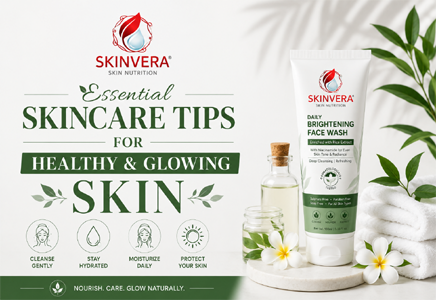
Essential Skincare Tips for Healthy & Glowing Skin
Our well-intentioned attempts
01 January 1970

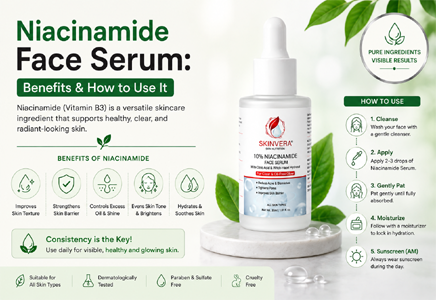
When it comes to skincare ingredients that can support a healthier, smoother, and more balanced complexion, niacinamide has become a popular choice. Also known as nicotinamide, niacinamide is a form of Vitamin B3 that is widely used in modern skincare products, including face serums, moisturizers, cleansers, and sunscreens.
What makes niacinamide especially appealing is its versatility. Research has associated topical niacinamide with benefits such as supporting the skin barrier, improving the appearance of uneven pigmentation, helping regulate excess oil, and reducing the appearance of some signs of skin aging.
If you're considering adding a niacinamide face serum to your skincare routine, here's everything you should know.
Niacinamide is a water-soluble form of Vitamin B3. Unlike niacin, another form of Vitamin B3, niacinamide is commonly used in topical skincare because it is generally well tolerated and can be incorporated into different types of formulations.
It has been studied for its effects on the skin barrier, pigmentation, inflammation, sebum production, acne, and visible signs of photoaging.
A niacinamide serum delivers this ingredient directly to the skin in a lightweight formulation, making it an easy addition to a daily skincare routine.
One of the most important benefits of niacinamide is its ability to support the skin barrier.
A healthy skin barrier helps the skin retain moisture and provides protection against everyday environmental irritants. Niacinamide has been associated with improved barrier function and increased production of certain skin lipids.
A stronger barrier can help skin feel:
Softer
Smoother
More comfortable
Better hydrated
Less prone to dryness
Uneven pigmentation and dark spots are common skincare concerns. Niacinamide has been studied for its ability to influence the transfer of melanosomes—the structures that carry pigment—from melanocytes to surrounding skin cells.
Clinical research has also reported improvements in hyperpigmentation with topical niacinamide formulations.
With consistent use, a suitable niacinamide serum may help your complexion look more even and radiant.
If your skin becomes shiny quickly, niacinamide may be a useful ingredient to consider.
Research and dermatology references describe niacinamide's potential sebostatic effects, meaning it may help regulate excessive sebum production.
Balanced oil production can contribute to a cleaner-looking complexion and may be particularly useful for people with oily or combination skin.
Niacinamide cannot permanently shrink the physical size of pores. However, by supporting skin barrier health, helping balance oil production, and improving the overall appearance of skin texture, it may make pores appear less noticeable.
This can help create a smoother-looking complexion over time.
Niacinamide has also been investigated for acne and inflammatory skin concerns. Some clinical research has found benefits from topical niacinamide formulations in acne management, although it should not be considered a universal replacement for medically recommended acne treatments.
For people with oily or acne-prone skin, a well-formulated niacinamide serum can be a useful addition to a broader skincare routine.
Niacinamide is also used in anti-aging skincare. By supporting the skin barrier and helping improve the appearance of pigmentation and texture, it can contribute to healthier-looking, more youthful-looking skin.
Consistent skincare and daily sun protection remain essential when your goal is to maintain healthy-looking skin as you age.
One of the reasons niacinamide is so popular is its versatility. It can be used in routines designed for:
Normal skin
Oily skin
Dry skin
Combination skin
Acne-prone skin
Uneven-looking skin tone
However, individual reactions can vary. Even ingredients that are generally well tolerated can cause irritation in some people.
Adding a niacinamide serum to your skincare routine is relatively simple.
Begin with a gentle cleanser to remove dirt, sweat, excess oil, and other impurities.
Pat your face dry rather than rubbing it aggressively.
Apply a small amount of your niacinamide serum to your face and neck according to the product's directions.
Allow the serum to absorb before moving on to the next step.
Follow with a moisturizer suitable for your skin type. This helps support hydration and the skin barrier.
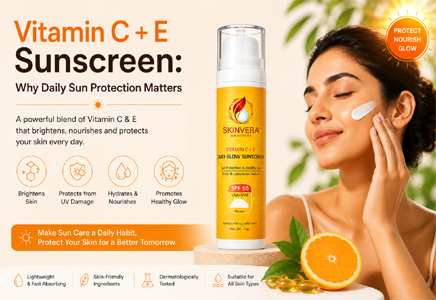
If you're using niacinamide during your morning routine, finish with a broad-spectrum sunscreen.
Daily sunscreen is particularly important when you're working on uneven pigmentation because UV exposure can contribute to further pigmentation. A systematic review of topical treatments for post-inflammatory hyperpigmentation found broad-spectrum SPF 30+ sunscreen was recommended in almost every study reviewed.
Niacinamide can generally be incorporated into either a morning or evening routine. Some people use it once daily, while others use it twice daily depending on the formulation and their skin's tolerance.
Cleanser → Niacinamide Serum → Moisturizer → Sunscreen
Cleanser → Niacinamide Serum → Moisturizer
If you're new to niacinamide, starting once a day can be a simple way to see how your skin responds.
The concentration of niacinamide varies between skincare products. Many commercial products contain concentrations around or below 5%, although higher concentrations are also available. Reviews of cosmetic ingredients report that formulations below 5% are generally well tolerated, while irritation can occur in some users.
Clinical research has demonstrated benefits with formulations containing different concentrations, including 4% and 5% niacinamide.
More importantly, a higher percentage isn't automatically better. Product formulation, skin type, consistency, and individual tolerance all matter.
If you have sensitive skin, consider starting with a lower concentration and gradually increasing frequency if your skin tolerates it.
For many people, niacinamide can be used daily. It is generally considered a well-tolerated skincare ingredient, although mild irritation, redness, itching, or burning can occur in some individuals.
If your skin becomes irritated, reduce the frequency or stop using the product and simplify your routine.
One of the advantages of niacinamide is that it can fit into many different skincare routines.
It can commonly be paired with ingredients such as:
Hyaluronic acid
Vitamin C
Ceramides
Retinol
Glycolic acid
Moisturizers
Sunscreen
Cleveland Clinic notes that niacinamide can be incorporated alongside several common skincare ingredients, including Vitamin C, ceramides, hyaluronic acid, glycolic acid, and retinol.
However, if your routine already contains multiple active ingredients, introducing them gradually can make it easier to identify the cause if irritation occurs.
Yes, niacinamide and Vitamin C can be included in the same overall skincare routine. Modern formulations are designed to combine a variety of active ingredients, and current dermatology guidance does not require routinely separating these two ingredients.
If your skin is sensitive, however, introducing one product at a time is a practical approach.
Adding several powerful skincare products at once can increase the chance of irritation. Keep your routine simple when introducing a new serum.
A niacinamide serum can support a skincare routine, but it cannot replace sunscreen. If you're concerned about dark spots or uneven skin tone, daily sun protection is especially important.
More product does not necessarily mean better results. Follow the recommended amount on the product label.
Skincare requires consistency. Give your routine time and avoid changing products constantly.
If you experience persistent burning, swelling, severe redness, or other concerning reactions, discontinue the product and seek advice from a qualified dermatologist.
A niacinamide face serum may be worth considering if you're looking to support:
A healthier skin barrier
A more balanced-looking complexion
Reduced appearance of excess oil
Smoother-looking skin texture
A more even-looking skin tone
The appearance of dark spots
Overall skin hydration and comfort
The best skincare routine depends on your individual skin needs, so choose products accordingly.
If you're starting from scratch, you don't need a complicated routine.
1. Gentle Cleanser
2. Niacinamide Face Serum
3. Moisturizer
4. Broad-Spectrum Sunscreen
1. Gentle Cleanser
2. Niacinamide Face Serum
3. Moisturizer
This simple routine provides a practical foundation for maintaining healthy-looking skin.
Niacinamide is a versatile form of Vitamin B3 that has earned its place in modern skincare. From supporting the skin barrier and balancing oil to improving the appearance of uneven tone, pigmentation, and texture, it can be a useful ingredient for many different skincare routines.
The key is not simply choosing the highest concentration or using multiple products. Instead, focus on a suitable formulation, consistent application, gentle skincare, and daily sun protection.
If you're looking for a simple way to enhance your daily skincare routine, a SkinVera Niacinamide Face Serum can be incorporated after cleansing and followed by moisturizer and sunscreen during the daytime.
Healthy-looking skin starts with understanding your skin—and giving it consistent, thoughtful care.
 1
1